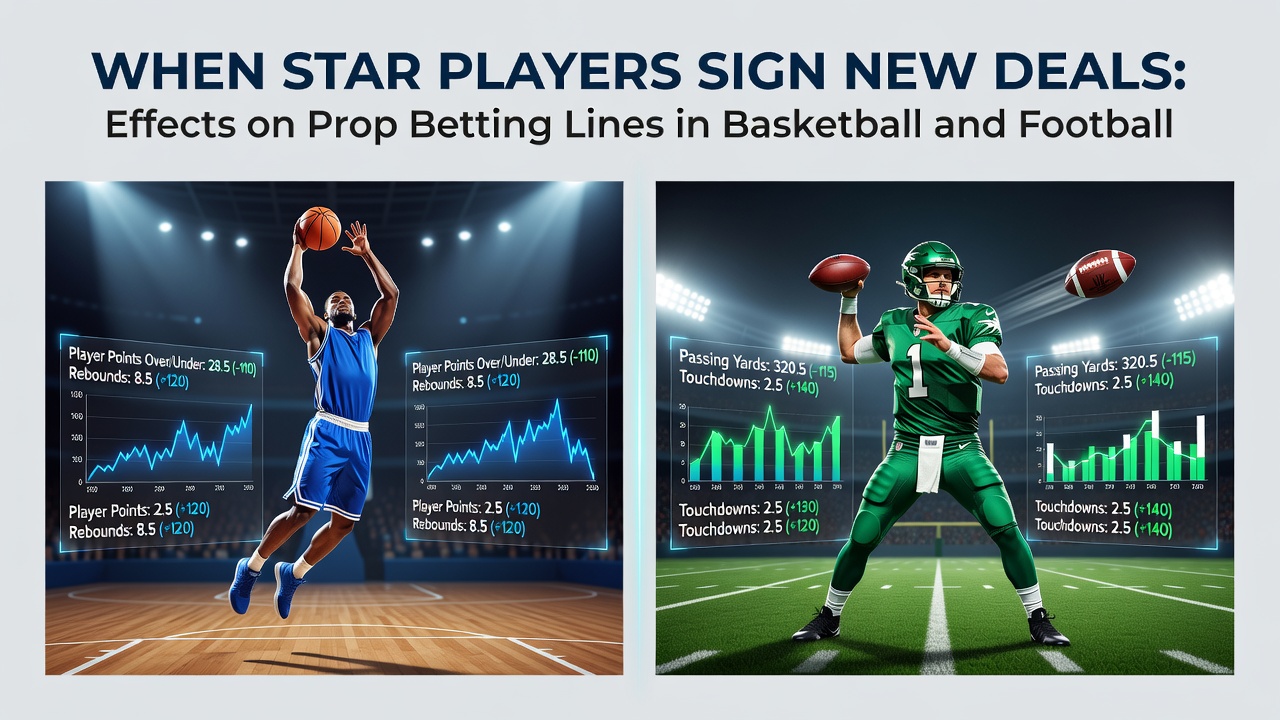
When Star Players Sign New Deals: Effects on Prop Betting Lines in Basketball and Football
Contract extensions and free agency signings for star athletes often trigger immediate recalibrations in prop betting markets across the NBA and NFL, where oddsmakers adjust individual player lines based on updated performance projections and public betting volume. Data from multiple seasons shows that these adjustments frequently elevate expected outputs for points, assists, rebounds in basketball and passing yards, touchdowns, rushing attempts in football, even when historical averages remain steady.
Market Reactions to High-Profile Signings
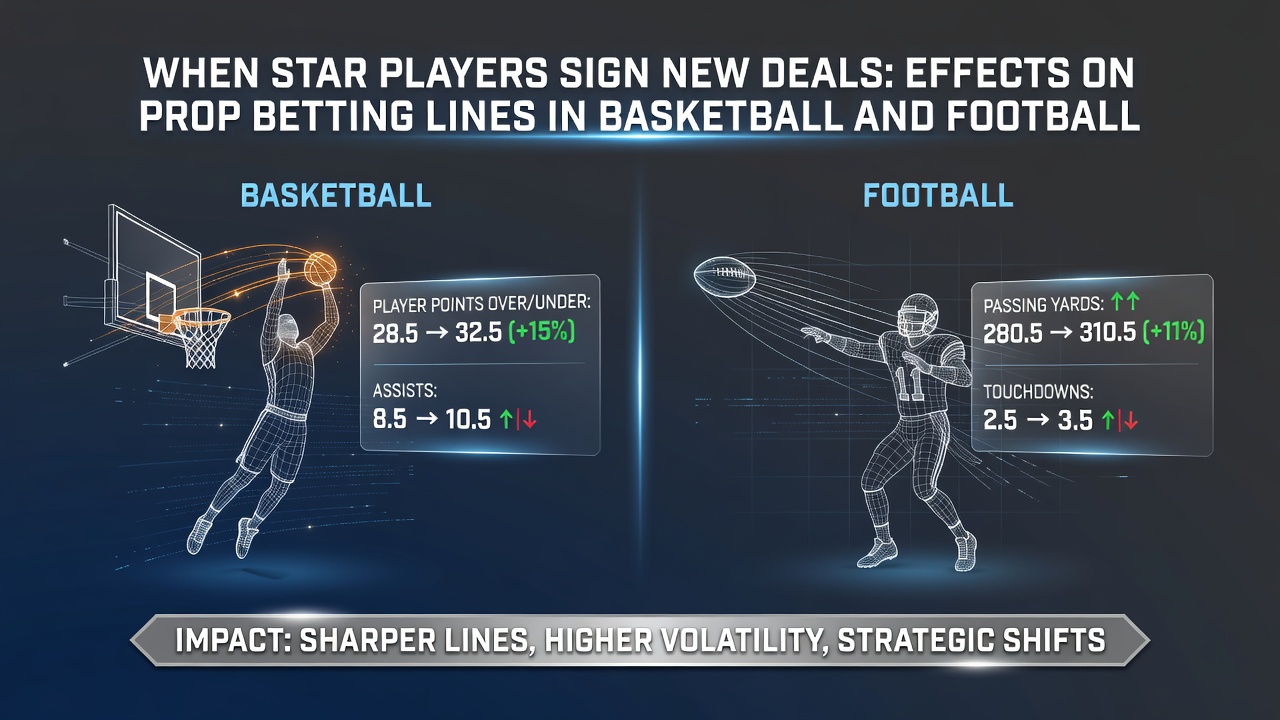
Observers note that when a franchise player secures a lucrative new deal, sportsbooks respond by shifting prop lines upward in the following weeks, particularly during training camp periods and early regular season games. Research compiled by the Canadian Gaming Association indicates that average points per game props for NBA stars rise by 1.5 to 3 points in the first month after a major extension, driven by increased media coverage and bettor expectations rather than sudden performance spikes. Similar patterns emerge in the NFL, where quarterbacks signing new contracts see their passing yardage lines climb as sportsbooks account for perceived motivational boosts and roster stability.
Those who track line movements closely find that these shifts occur rapidly, often within 24 to 48 hours of the announcement, because oddsmakers incorporate both player-specific data and broader market sentiment. In basketball, for instance, rebounding props for frontcourt players tend to adjust when they sign extensions that keep them with familiar teammates, while in football the effects concentrate more on skill position players whose usage rates remain consistent across coaching schemes.
Basketball Prop Adjustments in the NBA
NBA prop markets demonstrate pronounced sensitivity to star signings because individual statistics form the core of daily fantasy and betting interest. When guards or forwards finalize new contracts in July, lines for assists and three-pointers made frequently increase by margins that reflect projected usage growth, even before the season begins. Figures from league tracking systems reveal that players coming off extensions post higher opening totals for points in their first 10 games compared to the prior season, although actual outcomes vary based on team chemistry and injury reports.
What's notable is how these adjustments create ripple effects across related props, such as combined points plus rebounds lines or player performance milestones. Oddsmakers monitor early betting action closely, and when volume concentrates on the over side following a signing, they respond by nudging totals further to balance the book. Studies from university research groups have documented that such patterns hold across multiple seasons, with the magnitude of line movement correlating directly to contract size and local market hype.
Football Prop Line Shifts in the NFL
NFL prop betting lines for star players exhibit comparable dynamics, particularly around quarterback and running back contracts finalized during the offseason or midseason. Data indicates that rushing yardage props for running backs who sign extensions often open 10 to 15 yards higher in week one compared to their previous year's average, reflecting assumptions about increased carries in stable offensive systems. Passing touchdown props for quarterbacks follow similar trajectories when new deals signal long-term commitment from the franchise.
Line adjustments in football also intersect with external factors like offensive line continuity and schedule strength, yet the initial reaction to the signing itself tends to dominate early market pricing. Those monitoring these markets observe that unders become more attractive later in the season once the initial excitement fades and actual game scripts play out, creating opportunities for bettors who track both contract news and in-season trends.
Data Patterns and Timing Considerations
Comprehensive reviews of historical prop data show that the largest line movements occur in the first two weeks after a signing, after which markets stabilize as more game film and statistical samples become available. In both leagues, props tied to efficiency metrics such as yards per attempt or true shooting percentage adjust more modestly than raw volume stats, because oddsmakers prioritize usage projections over per-play outcomes. Research published through academic channels demonstrates that these timing patterns remain consistent year over year, allowing analysts to model expected line movements based on contract announcement dates and player position.
Betting volume spikes accompany these shifts, with recreational action often pushing lines further before professional bettors step in to correct inefficiencies. The interplay between public perception and sharp money creates a window where lines may temporarily overreact, particularly when the signing involves a player returning to a familiar team rather than joining a new one.
Conclusion
Contract signings for star players in basketball and football generate measurable effects on prop betting lines through a combination of updated projections, media amplification, and betting market dynamics. Data across multiple seasons confirms that lines move upward in the immediate aftermath, with the extent of adjustment varying by sport, position, and contract context. Observers who follow these markets find value in monitoring announcement timing alongside subsequent performance trends, because the initial reaction often gives way to more calibrated pricing once regular season data accumulates.