Tracing Altitude Variations and Their Quiet Effects on Scoring Totals in High-Elevation MLB and NHL Venues
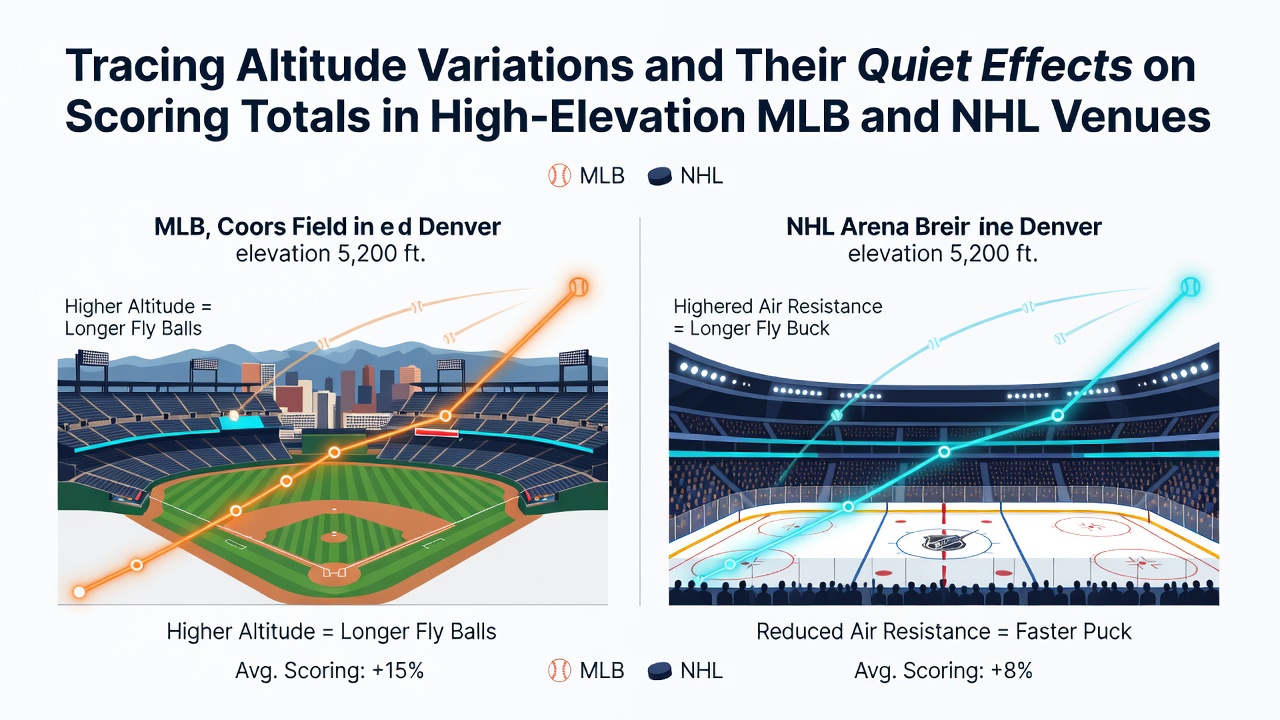
Altitude changes create measurable shifts in how baseballs and hockey pucks move through the air, and observers note these patterns appear consistently in venues like Denver's Coors Field for MLB along with the same city's Ball Arena for NHL contests where elevation exceeds 5,000 feet. Data collected over multiple seasons shows that reduced air density allows projectiles to travel farther with less drag, which leads to elevated run and goal totals when teams play at these sites compared to sea-level locations. Researchers from institutions such as the University of Colorado have documented how the thinner atmosphere alters trajectories without changing player skill levels, while equipment behaves differently because of lower resistance.
Physical Principles Behind Altitude-Driven Scoring Shifts
Air pressure drops as elevation rises, and this reduction means fewer molecules collide with a moving ball or puck, so both objects maintain speed longer and cover extra distance before gravity pulls them down. Studies indicate that a baseball hit at 5,280 feet experiences roughly 10 to 15 percent less drag than an identical swing at sea level, which produces more extra-base hits and home runs according to pitch-tracking systems used across the league. In hockey the puck travels similarly, yet the effect combines with faster skating speeds because players encounter less wind resistance during rushes, and this combination contributes to higher shot volumes that sometimes translate into elevated goal counts during home stands at high-elevation rinks.
MLB Patterns at Coors Field and Comparable Sites
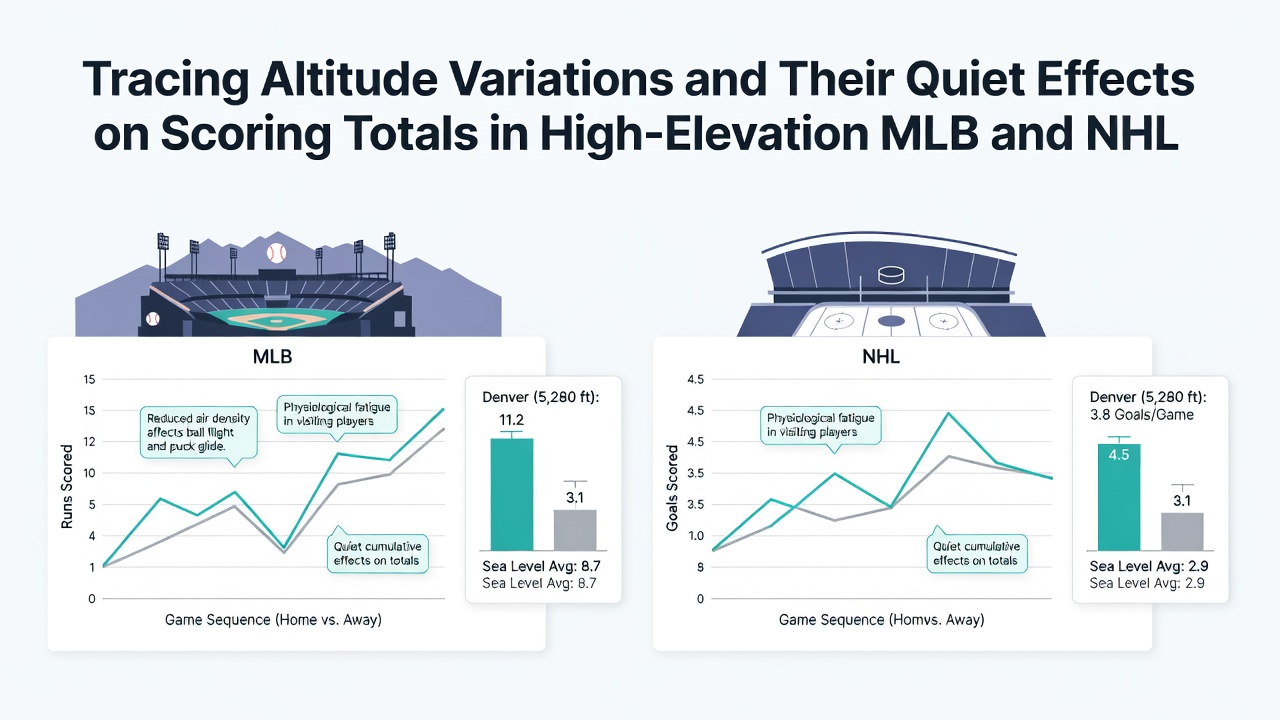
Coors Field sits at 5,280 feet above sea level, and historical box scores reveal that the Colorado Rockies average more runs per game at home than any other MLB team over the past three decades. League data shows visiting clubs also post higher offensive outputs during road trips to Denver, whereas pitchers record elevated earned-run averages because fly balls carry farther and line drives become extra-base hits more often. Observers note that humidors introduced to store baseballs at the stadium have moderated some of the altitude advantage, yet scoring totals remain above league norms during summer months when daytime temperatures compound the thin-air effect. Other MLB parks sit at moderate elevations such as Chase Field in Phoenix at 1,100 feet, and statistical reviews confirm smaller but still detectable increases in home-run rates compared to coastal stadiums.
NHL Scoring Trends in High-Elevation Markets
The Colorado Avalanche play their home games at Ball Arena, which shares Denver's 5,280-foot elevation, and game logs indicate that total goals per contest trend slightly higher when the team hosts opponents compared to road games at lower venues. League-wide figures reveal that the combination of quicker puck movement and increased shot attempts creates more odd-man rushes, while goaltenders face added difficulty tracking trajectories that behave differently in thinner air. Canadian regulatory bodies such as those overseeing sport science at Sport Canada have supported research into environmental factors, and their reports highlight how altitude influences endurance during back-to-back sets because oxygen availability affects recovery between shifts. Additional NHL cities such as Calgary sit near 3,400 feet, and similar though milder scoring elevations appear in those datasets when compared against sea-level arenas in Boston or New York.
Seasonal Data and Adjustments Across 2025-2026 Campaigns
Through the first half of the 2025-2026 MLB season, teams visiting Coors Field posted combined run totals that exceeded the league average by nearly two runs per game according to official MLB statistics. In the NHL, Avalanche home contests during the same period produced an average of 6.4 total goals compared with 5.9 on the road, and analysts attribute part of the difference to altitude rather than roster strength alone. Equipment manufacturers have responded with adjusted baseball seams and puck designs tested at various elevations, while training protocols now incorporate simulated altitude chambers for visiting clubs preparing for Denver trips. These adaptations appear in team reports filed with league offices, and they demonstrate ongoing efforts to account for environmental variables that quietly reshape game outcomes.
Comparative Analysis with Lower-Elevation Venues
When researchers compare scoring distributions across all MLB and NHL venues, the largest deviations cluster around the few sites above 4,000 feet, whereas parks and arenas near sea level show tighter clustering around league means. Travel fatigue metrics collected by National Institutes of Health studies further separate altitude effects from jet-lag influences, and the data isolates elevation as an independent contributor to offensive spikes. Teams that schedule extended stays in Denver sometimes post improved defensive numbers after acclimatization periods, yet the projectile-trajectory advantage persists for hitters and shooters regardless of roster adjustments.
Conclusion
Altitude variations continue to influence scoring totals in measurable ways at the limited number of high-elevation MLB and NHL venues, and statistical patterns documented across decades confirm the physical mechanisms at work. Equipment modifications, training protocols, and league data collection all reflect ongoing recognition of these environmental factors, while future seasons will likely see additional refinements as measurement technology improves. The quiet but consistent effects remain embedded in game logs from Denver and similar markets, shaping outcomes without requiring changes to rules or player personnel.