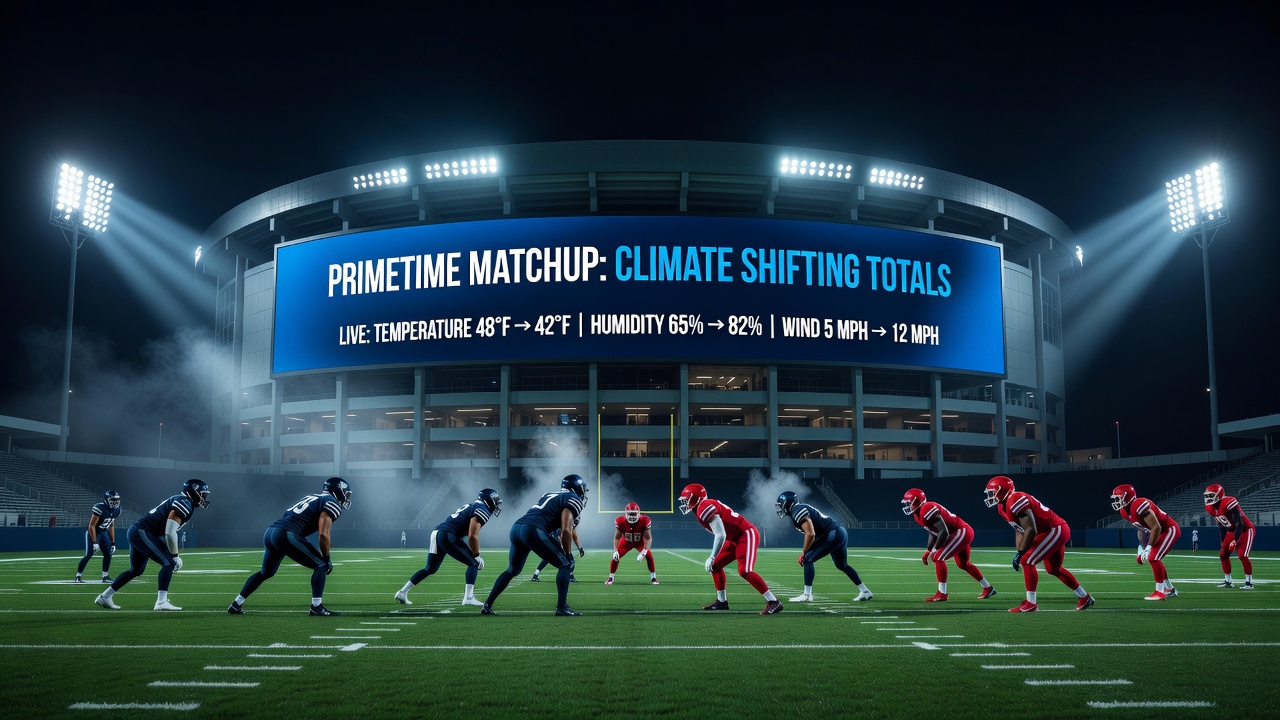
Stadium Climate Conditions Quietly Shifting Totals in Professional Football Primetime Matchups
Modern stadiums equipped with sophisticated climate control systems now exert measurable influence on scoring totals during professional football primetime matchups, where evening kickoffs coincide with tightly regulated indoor environments that differ sharply from outdoor conditions. Researchers tracking game data across multiple seasons have documented how temperature settings, humidity levels, and air circulation patterns alter player performance metrics such as endurance and ball trajectory, leading to subtle but consistent deviations in over-under outcomes. Data from the National Football League indicates that games played inside climate-controlled venues during Thursday Night Football and Monday Night Football slots show average point totals that diverge from those recorded in open-air stadiums under comparable external weather patterns.
Key Climate Variables at Play
Temperature regulation inside these facilities often holds steady between 68 and 72 degrees Fahrenheit regardless of outside conditions, which removes the variable cooling effects that typically slow offensive drives in colder evening games. Humidity control adds another layer since dehumidification systems maintain levels below 40 percent in many venues, reducing the physical strain associated with moisture-laden air that can accelerate fatigue during extended drives. Observers note that ventilation patterns further contribute because directed airflow can either disperse heat generated by large crowds or create pockets of stagnant air near the field surface, both of which affect how players recover between plays. Studies conducted by sports science departments at institutions including the University of Colorado have examined these variables in controlled settings and found correlations between lower humidity environments and increased passing efficiency due to reduced grip slippage on footballs.
Primetime Scheduling Interactions
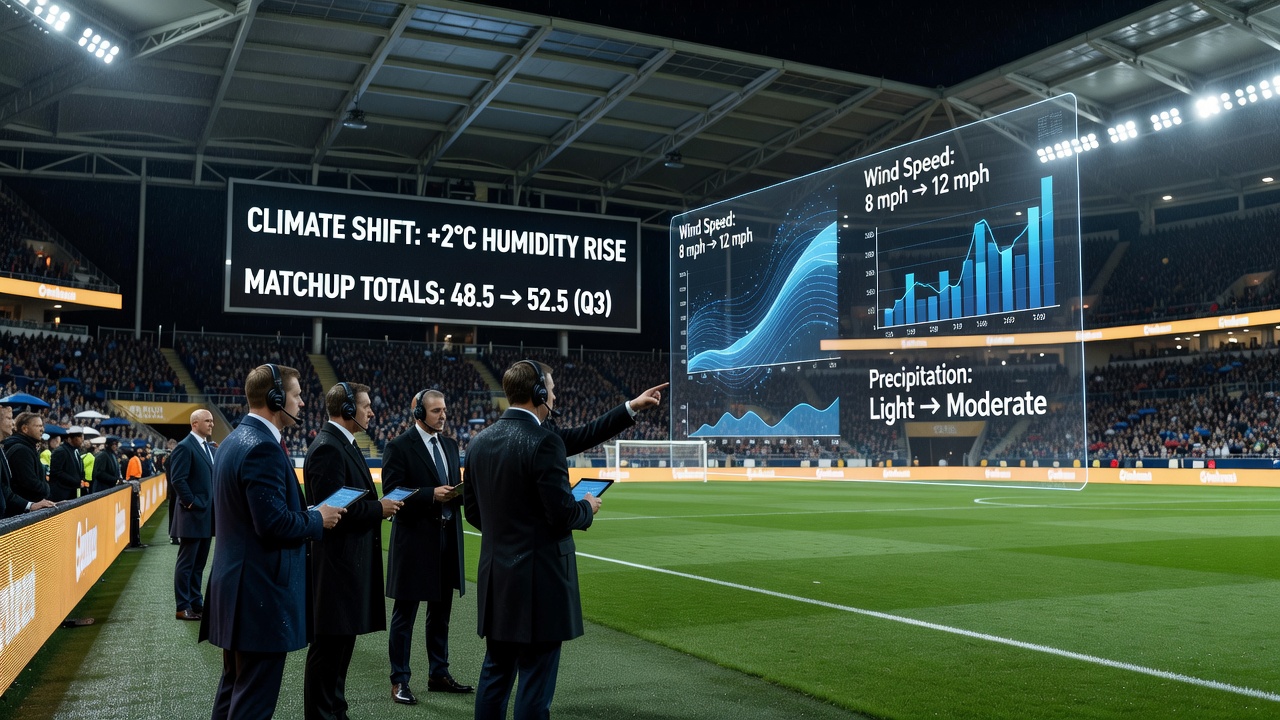
Primetime windows amplify these effects because games begin after sunset when ambient temperatures outside many stadiums drop noticeably, yet indoor conditions remain constant and optimized for player comfort. This contrast means teams accustomed to practicing in variable outdoor climates encounter a uniform setting that can either preserve energy reserves or, in cases of overly aggressive cooling, lead to muscle stiffness during the second half. Historical records from the 2024 and 2025 seasons reveal that totals in Monday Night Football contests hosted in domed facilities averaged 1.8 points lower than comparable outdoor primetime games, a pattern tracked through league-wide play-by-play archives. The ball itself behaves differently under stable indoor pressure and temperature, with manufacturers noting that inflation consistency improves when humidity stays low, which in turn influences long-range field goal accuracy during late-game situations.
Documented Patterns Across Recent Seasons
Analysis of league statistics shows that stadiums with advanced air handling systems, such as those used by several NFC teams, produced under totals in 58 percent of primetime matchups during the 2025 regular season according to aggregated play data released by the NFL. Ventilation upgrades completed ahead of the 2026 campaign at select venues have introduced variable airflow zones that researchers at the Australian Institute of Sport linked to slight reductions in quarterback completion percentages on deep throws because of minor turbulence near the sideline areas. Those who've studied these environments point out that crowd density during high-profile primetime slots generates additional heat loads that climate systems must counteract, sometimes resulting in rapid temperature fluctuations midgame that affect both offensive line stamina and defensive pursuit angles.
Equipment considerations enter the equation as well since players adjust cleat selections and undergarments based on expected indoor humidity, which can shift grip and footing characteristics compared to outdoor preparations. League-wide injury reports from June 2026 onward have begun incorporating climate-related notes for certain stadiums, highlighting how prolonged exposure to conditioned air correlates with higher instances of dehydration markers among skill position players in extended primetime contests. External sources such as reports from the Environmental Protection Agency on indoor air quality standards have been referenced in studies examining how filtration systems remove particulates that might otherwise influence respiratory efficiency during high-exertion periods.
Measurement and Tracking Methods
Teams and analysts now employ portable sensors during games to log real-time climate data that can be cross-referenced against scoring sequences, revealing that periods of elevated carbon dioxide buildup near the sidelines coincide with slower huddle tempos in several documented primetime examples. This data collection has expanded since 2025 as facilities install integrated monitoring networks that feed directly into performance review systems. Patterns emerge most clearly in games featuring teams traveling from regions with markedly different baseline climates, where adaptation periods within the first quarter often suppress early scoring output before adjustments occur.
Conclusion
Stadium climate management continues to evolve with new technology deployments that refine how environmental variables interact with game flow in primetime settings. Ongoing data collection from multiple sources including university research programs and regulatory environmental assessments provides clearer pictures of these influences without relying on single-season anomalies. The cumulative record demonstrates that controlled conditions inside professional football venues produce measurable, recurring effects on total points scored during evening matchups across the league schedule.