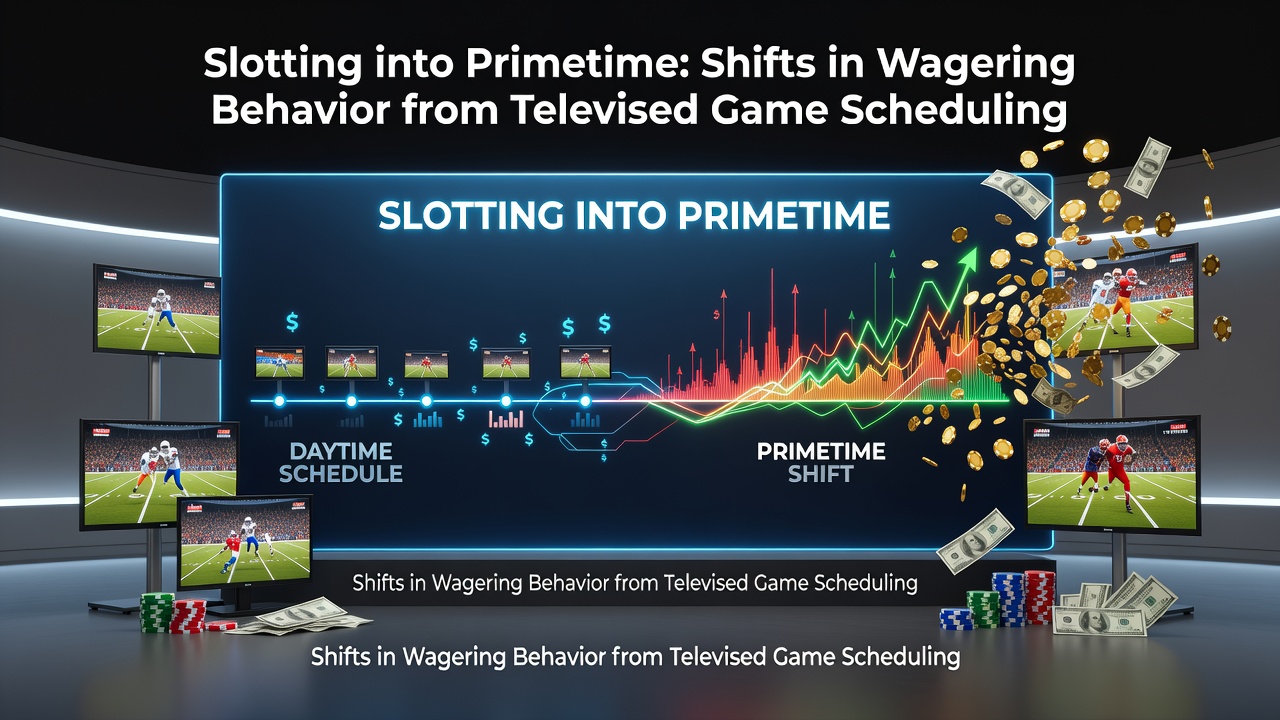
Slotting into Primetime: Shifts in Wagering Behavior from Televised Game Scheduling
Televised scheduling places certain matchups into evening slots that draw larger audiences, and this timing directly correlates with measurable changes in how bettors place wagers across NFL, NBA, and NHL markets. Data from the 2025-2026 season shows that games aired after 8 p.m. Eastern time generate higher handle volumes than afternoon contests, with increases ranging from 25 to 40 percent depending on the sport and market. Observers note that the extended window gives casual participants more time to review lines, watch pregame shows, and adjust selections before kickoff or tipoff.
Volume Patterns Across Major Leagues
Figures from sportsbooks operating in multiple states indicate that primetime NFL games produce the largest spikes, while NBA and NHL contests scheduled in similar windows follow a similar though smaller pattern. Researchers tracking handle across legal markets found that Monday Night Football games consistently outpace Sunday afternoon games by an average of 35 percent in total wagers placed. The same studies reveal that college football primetime windows create comparable lifts, particularly when conference matchups receive national coverage. Bettors respond to the visibility by increasing activity on both sides of the spread and on player props that receive more airtime during broadcasts.
Line Movement and Public Influence
Primetime exposure also alters how odds shift in the hours leading up to a game. Lines that open in the morning often move more sharply once television coverage begins, because increased public participation pushes totals and spreads in directions that reflect narrative emphasis rather than sharp money alone. Data compiled through the first half of 2026 shows that primetime totals in the NFL moved an average of 1.8 points after 6 p.m. on game day, compared with 0.9 points for afternoon games. Similar patterns appear in NBA over/under markets when games receive national broadcasts. The additional attention compresses the window for early bettors and forces sportsbooks to adjust limits or odds more frequently during the evening.
Regional and Demographic Shifts
Geographic differences emerge when primetime slots expand reach beyond local markets. Markets in the Mountain and Pacific time zones see elevated late-night betting activity when East Coast games air in primetime, because the later local start time aligns with leisure hours for more residents. Reports from state gaming agencies document that Nevada and New Jersey both recorded higher percentages of mobile wagers placed between 9 p.m. and midnight during the 2025 NFL season when multiple primetime games overlapped. Demographic tracking indicates younger bettors increase participation in these windows, while older cohorts maintain steadier volumes regardless of start time.
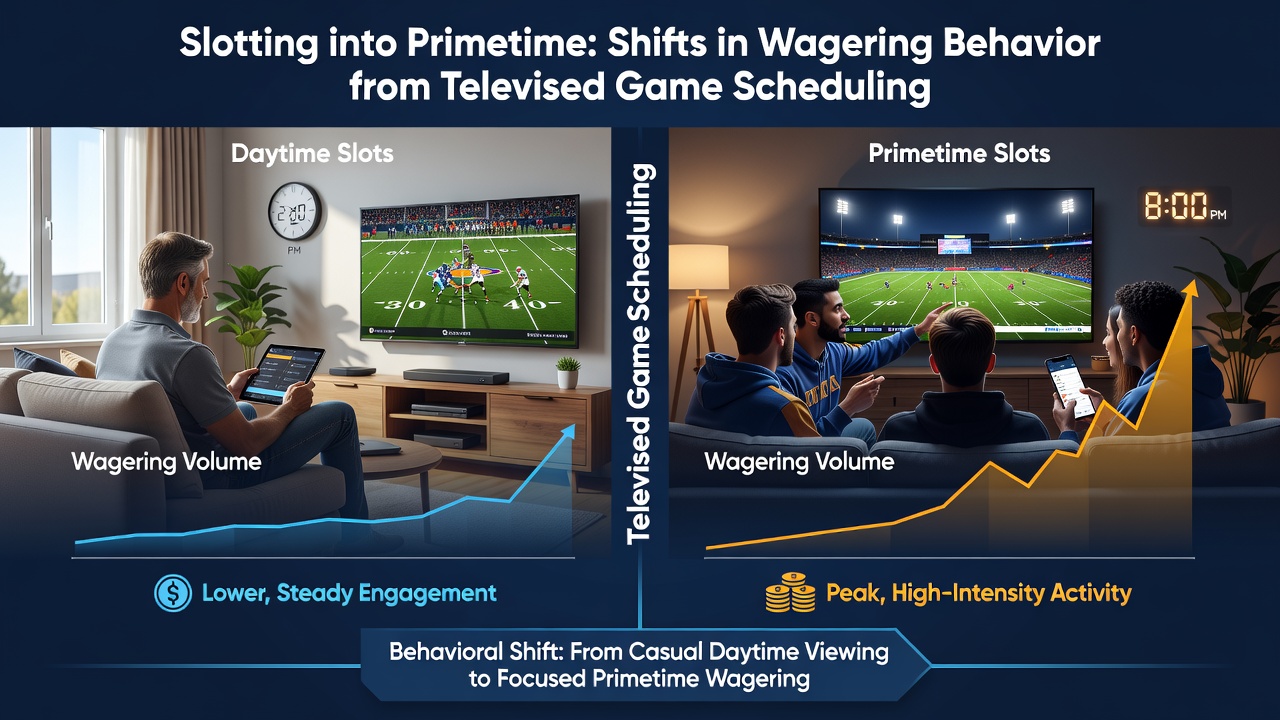
Live betting volumes rise noticeably once a primetime game begins, because continuous coverage keeps viewers engaged with in-game props and adjusted spreads. According to aggregated sportsbook data, live wagers account for 42 percent of total handle on Monday night NFL contests, versus 28 percent on early Sunday games. The extended broadcast gives participants repeated opportunities to react to scoring plays, injuries, and momentum shifts that appear on screen.
Prop Markets and Narrative Effects
Player prop markets experience distinct movement tied to televised exposure. When a quarterback or star forward receives repeated mentions during pregame and halftime segments, correlated props see increased ticket counts even when the underlying numbers have not changed. Industry reports covering the 2025-2026 seasons found that touchdown props for featured players in primetime NFL games averaged 60 percent more volume than the same props in afternoon contests. NHL goalie props and NBA player performance lines follow parallel trends when national broadcasts highlight individual matchups. These patterns hold across both legal and regulated markets tracked by state commissions.
Future Scheduling Considerations
League schedules released in July 2026 already reflect awareness of these wagering dynamics. Broadcasters and leagues continue to balance competitive fairness with audience draw, knowing that primetime placement influences both viewership and betting activity. Data sets maintained by academic researchers at institutions such as the University of Nevada, Las Vegas, track how these placements affect long-term line accuracy and market efficiency. The patterns suggest that continued expansion of national windows will sustain elevated evening handle while requiring sportsbooks to refine risk management around narrative-driven movement.
Conclusion
Televised primetime scheduling produces consistent, measurable effects on wagering volume, line movement, and prop activity across major professional leagues. The extended visibility window allows greater public participation, compresses adjustment periods for odds, and elevates live betting engagement. State regulatory data and academic tracking through mid-2026 confirm these shifts occur reliably across NFL, NBA, and NHL markets when games receive national evening coverage. As leagues finalize future schedules, these established patterns provide a factual basis for understanding how broadcast timing continues to shape betting behavior.