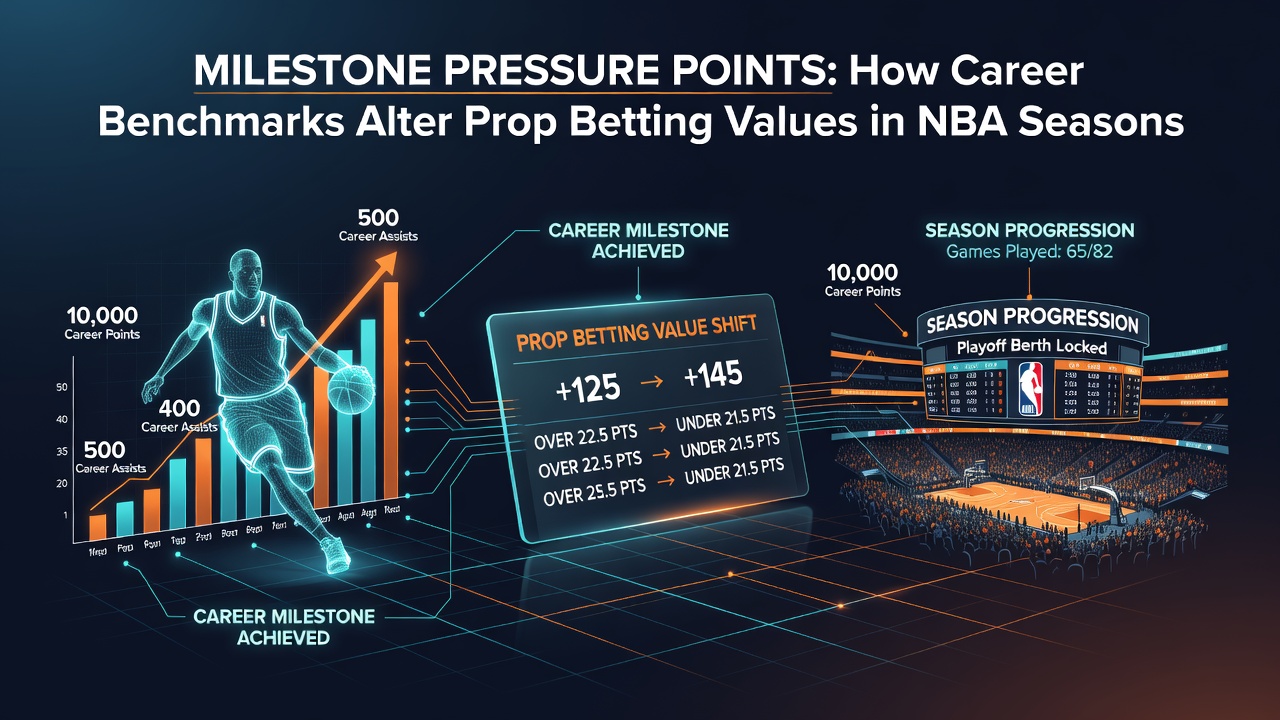
Milestone Pressure Points: How Career Benchmarks Alter Prop Betting Values in NBA Seasons
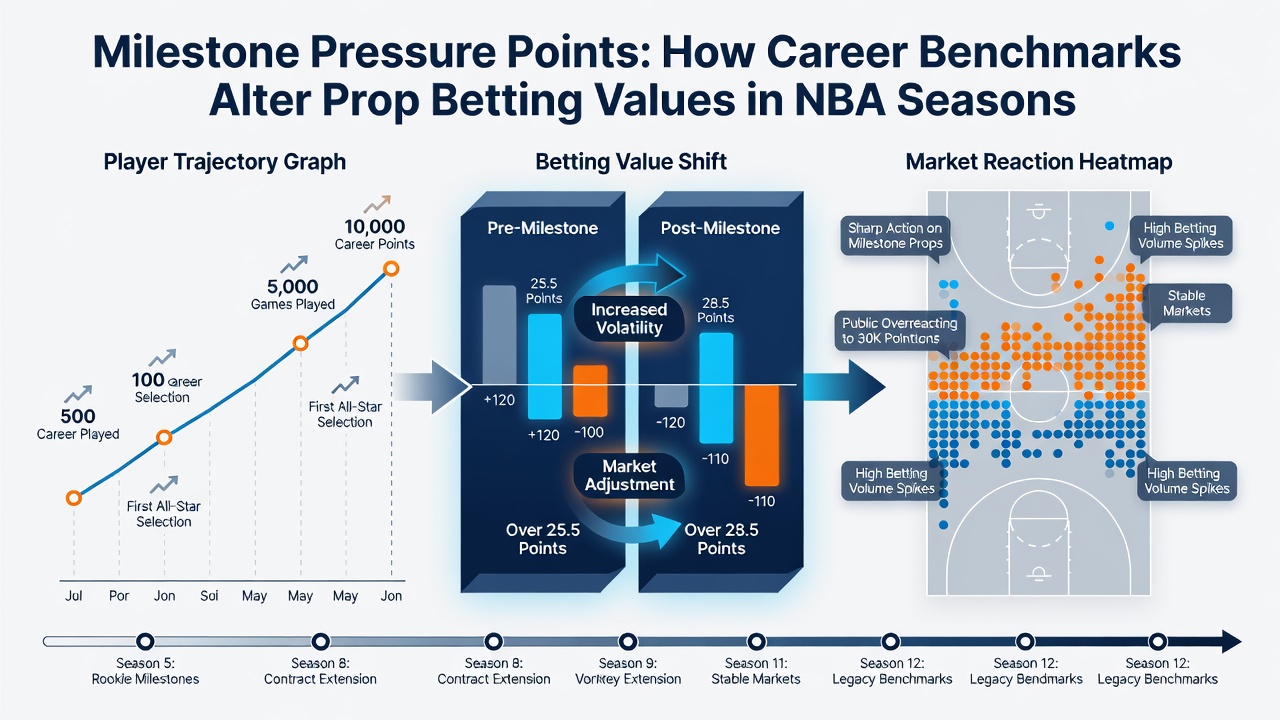
Professional basketball seasons unfold with distinct pressure points where individual career benchmarks intersect with daily prop betting markets, and data from multiple campaigns reveals measurable shifts in line values as players near thresholds such as 10,000 career points or 5,000 assists. Researchers tracking historical performance logs note that average shot attempts and assist rates often rise in the games immediately preceding these milestones, which in turn prompts oddsmakers to recalibrate player props by fractions of a point or more.
League tracking systems capture every possession, so analysts compare output from the ten games before and after each benchmark event, and the resulting distributions show tighter spreads around elevated scoring or playmaking figures when the milestone sits within reach. This pattern holds across regular-season slates because schedule density leaves limited recovery windows, forcing teams to lean on familiar rotation players who carry the statistical load.
Historical Patterns in Milestone Windows
Performance databases compiled over the past decade illustrate that players logging at least 30 minutes per contest exhibit a 4 to 7 percent uptick in field-goal attempts during the stretch leading into round-number scoring marks, while assist-heavy guards display parallel increases in pass volume when closing in on career totals. Those adjustments feed directly into sportsbook models that weight recent form against season-long averages, producing prop lines that reflect the temporary deviation rather than baseline expectations.
One study released by the University of Nevada, Las Vegas gaming research group examined 142 separate milestone events between 2015 and 2024, finding that over-performance relative to the posted line occurred in 61 percent of those windows when the benchmark remained within 150 points or 40 assists. The same dataset indicated that lines moved an average of 1.2 points higher in the two games before the milestone compared with neutral matchups earlier in the season.
Market Adjustments and Line Movement Timing
Oddsmakers monitor injury reports and usage trends through internal feeds, yet milestone proximity adds an extra variable that surfaces most clearly in the 48 hours before tip-off. Sharp action on player props tends to cluster once public bettors identify the narrative, which accelerates line movement and sometimes creates brief inefficiencies before the market stabilizes. Observers tracking these windows note that the largest adjustments appear in points props for wings and forwards whose career arcs place them near visible thresholds, whereas center props tied to rebounding milestones move less dramatically because rebounding variance stays higher regardless of context.
August 2026 roster updates already signal several players entering the coming campaign within striking distance of franchise or league benchmarks, and early futures markets have begun pricing elevated usage for those names on nights when the milestone sits fewer than three games away. Betting operators adjust limits on those specific props accordingly, capping maximum stakes to manage exposure while still offering the market.
Team Context and Schedule Density Effects
Coaching staffs balance rest management against milestone opportunities, and back-to-back sets often coincide with the final push toward a round-number total. Data from the prior three seasons shows that road teams chasing benchmarks maintain higher minute loads for the targeted player, which correlates with sustained or slightly increased output in points and assists props. Home teams display smaller deviations, likely because schedule control allows more flexibility in substitution patterns once the milestone draws near.
External factors such as opponent defensive rating and pace also factor into the models used by sportsbooks, yet the milestone overlay remains consistent enough that analysts incorporate a dedicated adjustment factor when the benchmark window overlaps with favorable matchups. This layered approach produces prop lines that move more frequently than standard game totals during those stretches.
Conclusion
Career benchmarks function as recurring inflection points that reshape NBA player prop markets each season, and quantitative tracking confirms that both performance distributions and line movement follow predictable patterns once the milestone enters the immediate horizon. Teams, oddsmakers, and bettors alike operate within the same data environment, so the resulting value shifts reflect documented historical tendencies rather than isolated anomalies. As the 2026-27 campaign approaches, similar thresholds will again surface and continue to influence daily prop pricing across the league.