Linking Broadcast Narratives to Sudden Shifts in Live Odds Across NBA and NFL Playoff Windows
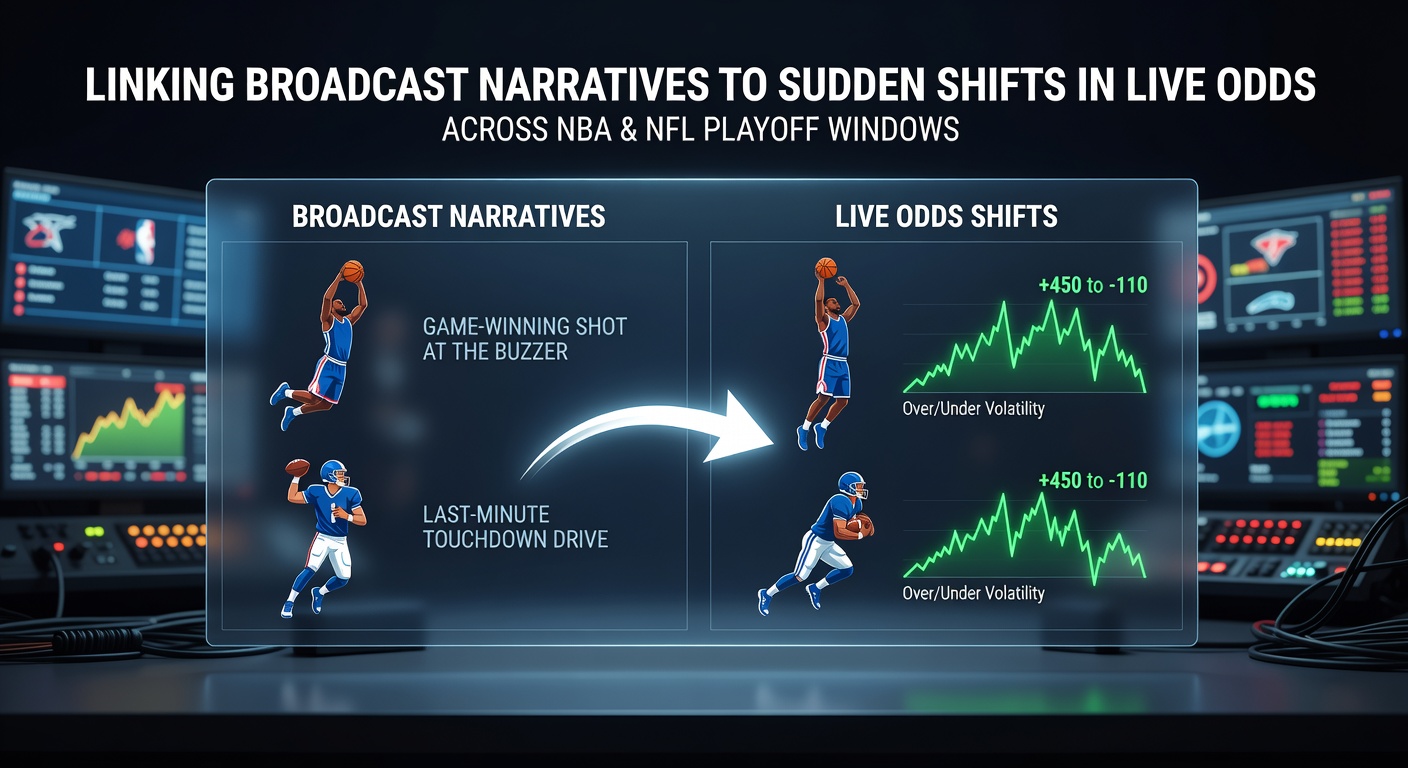
Playoff windows in the NBA and NFL create environments where broadcast commentary intersects directly with live betting markets, and commentators who emphasize certain storylines often coincide with measurable adjustments in point spreads, moneylines, and totals. Data from multiple postseason cycles shows that spikes in narrative focus on player injuries, historical rivalries, or momentum shifts precede volume increases in wagers, which sportsbooks then counter with line movements to balance exposure. Observers note that these patterns appear consistently across both leagues, although the timing and scale differ because NBA games feature more frequent scoring opportunities while NFL contests concentrate action in fewer decisive moments.
Narrative Construction During Live Broadcasts
Production teams and on-air talent select talking points that align with viewer engagement metrics, and these choices frequently highlight underdog resilience or star player dominance in ways that reach large audiences simultaneously. When a broadcast repeatedly references a quarterback's clutch performance history during an NFL playoff drive, bettors respond by placing live wagers on related props or sides, which triggers sportsbooks to shift odds within seconds to manage liability. Research indicates that the volume of such narrative-driven bets can exceed standard in-game fluctuations, particularly in high-viewership windows such as conference finals or championship rounds. In May 2026, NBA playoff broadcasts continued this pattern as commentators revisited regular-season head-to-head results during key Eastern Conference matchups, coinciding with documented adjustments in live totals.
Quantifying the Connection Between Commentary and Market Movement
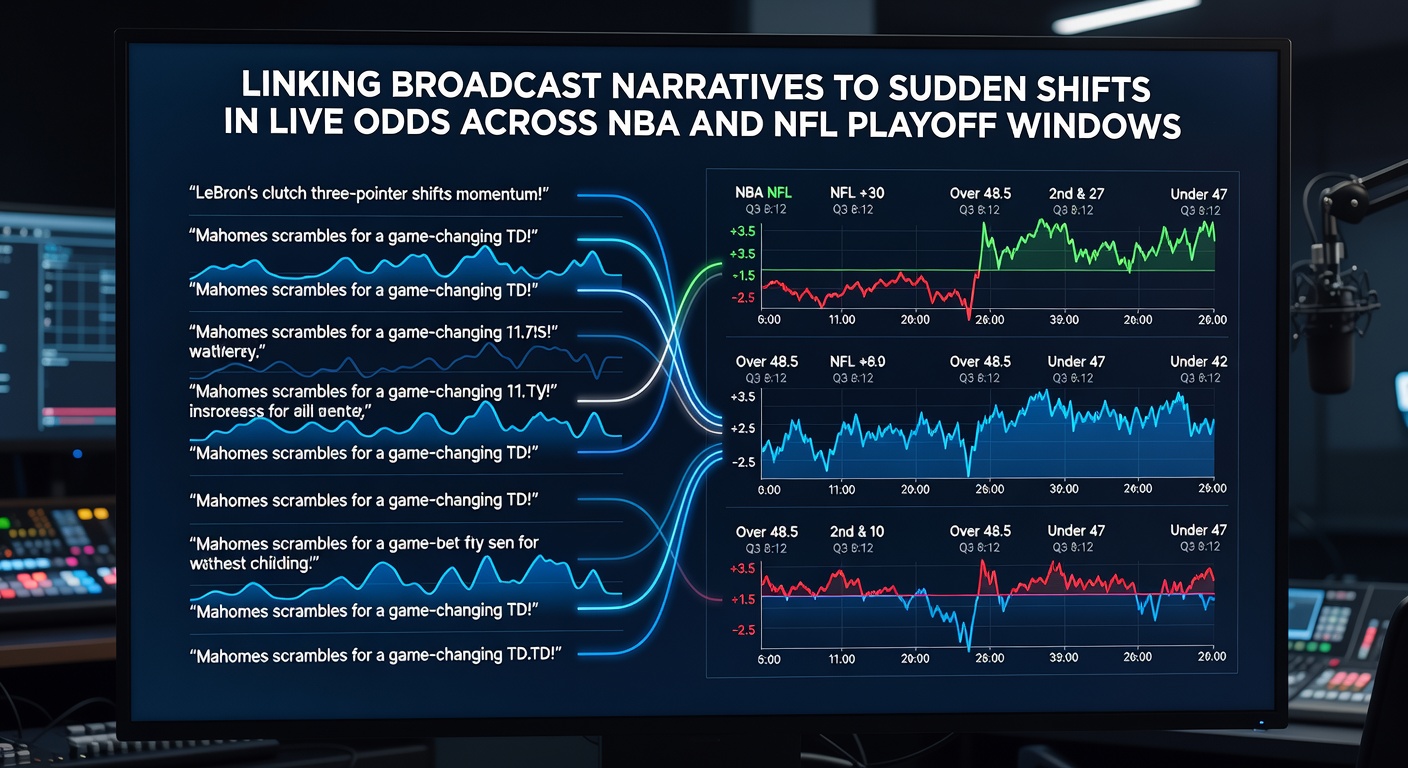
Tracking services record timestamped commentary segments alongside betting data feeds, and analysts have identified correlations where mentions of fatigue or travel schedules precede over/under line drops of half a point or more within two minutes. These shifts occur because public bettors often follow the broadcast thread rather than independent statistical models, which creates temporary imbalances that books correct through automated and manual adjustments. Figures from industry monitoring platforms reveal that NFL playoff games produce sharper reactions during red-zone sequences when announcers invoke historical scoring trends, whereas NBA sequences tied to timeout discussions generate steadier but smaller movements across player prop markets. The mechanism relies on audience size, since national broadcasts reach millions and translate commentary volume into wager volume faster than regional feeds.
League-Specific Patterns in NBA and NFL Windows
NBA playoff contests allow continuous scoring that keeps narrative threads active across quarters, and broadcasters who stress defensive adjustments or hot-hand streaks often see corresponding live spread movements of one to three points within short intervals. NFL windows operate differently because commercial breaks and longer play clocks create discrete moments when commentary clusters around upcoming drives, which concentrates bet flow and produces more abrupt line reactions. Data collected across recent postseason slates shows that injury updates delivered during broadcasts generate the largest single shifts, as these pieces of information reach the betting public before official league confirmations in some cases. External tracking from sources such as the American Gaming Association has documented elevated handle during these segments, confirming that narrative emphasis functions as a leading indicator for market activity.
Timing and Audience Reach Factors
Peak narrative impact occurs during nationally televised games when viewership numbers climb above typical thresholds, and the concentration of attention on one storyline amplifies its effect on live markets. Sportsbooks monitor social media amplification of broadcast comments because viral clips extend the narrative reach beyond the initial television audience, sustaining wager pressure for additional minutes. In both leagues, the effect compounds when multiple broadcast elements align, such as a coach's challenge review paired with statistical comparisons, because bettors receive layered reinforcement that accelerates decision-making. Researchers at institutions including the MIT Sloan Sports Analytics Conference have examined these timing windows and found measurable differences in line volatility between high-narrative and low-narrative segments.
Conclusion
Broadcast narratives function as catalysts that accelerate live odds adjustments during NBA and NFL playoff windows by directing collective attention toward specific game elements. The resulting bet flow prompts sportsbooks to recalibrate prices in real time, and the pattern repeats across postseason cycles because audience engagement and wagering behavior remain linked through the same information channels. Observers continue to monitor these intersections as playoff schedules evolve, noting that the relationship holds across varying market conditions and broadcast formats.