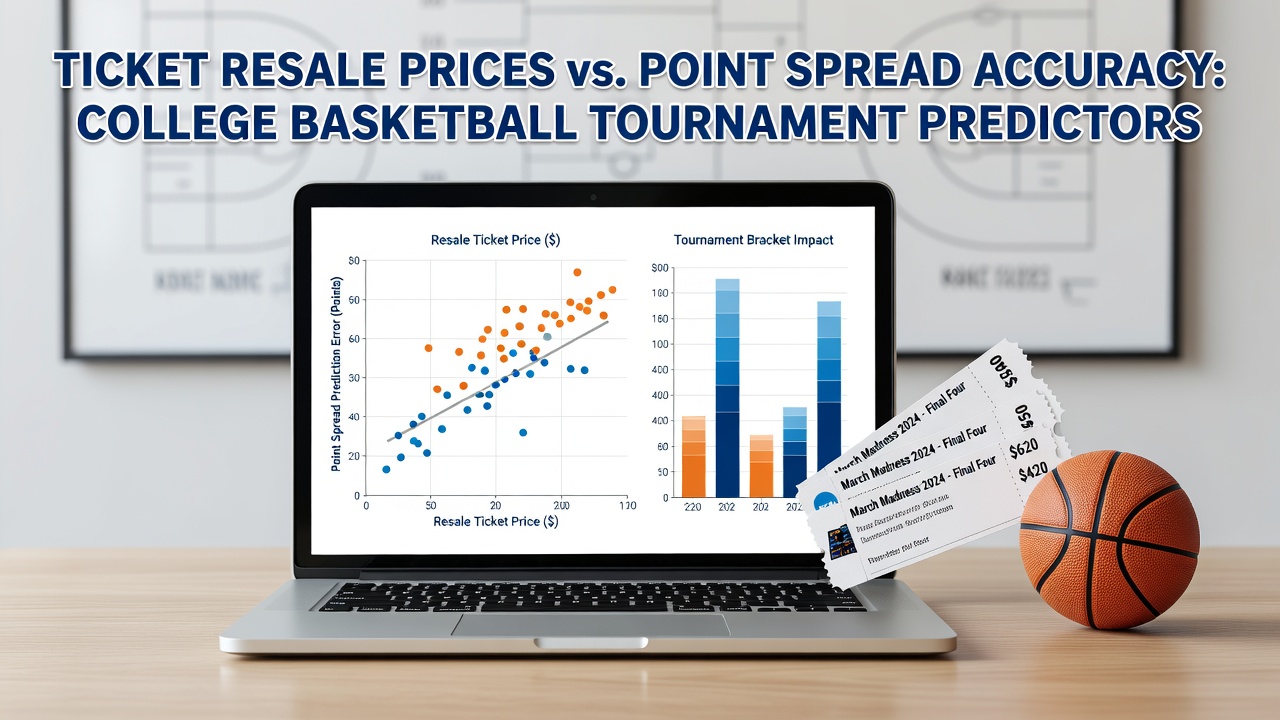
Exploring Ticket Resale Market Prices as Predictors for Point Spread Accuracy in College Basketball Tournaments
College basketball tournaments generate intense interest that extends well beyond the court and into secondary ticket markets where prices often shift rapidly based on team performance expectations and public demand. Observers note that these resale platforms reflect real-time sentiment which sometimes aligns with or diverges from the point spreads set by oddsmakers. Researchers have tracked data across multiple conference tournaments and the NCAA March Madness event to identify whether elevated resale premiums serve as reliable signals for how closely final margins match pregame spreads.
Secondary Markets and Their Data Patterns
Ticket resale activity peaks in the weeks leading up to conference tournaments and again during the national bracket stages with prices for high-profile matchups climbing when underdogs gain traction or favorites draw heavy support. Data compiled by the National Collegiate Athletic Association through attendance and market reports shows that resale premiums for certain first-round games rose sharply in 2025 when public perception shifted after conference play concluded. Analysts compare these price movements against historical spread accuracy rates which measure how often actual margins fall within a set number of points of the line. Patterns emerge when resale values for a contest exceed average thresholds by more than 30 percent because those games tend to produce outcomes closer to the spread or occasionally push beyond it due to heightened motivation on both sides.
Connecting Resale Prices to Spread Accuracy Metrics
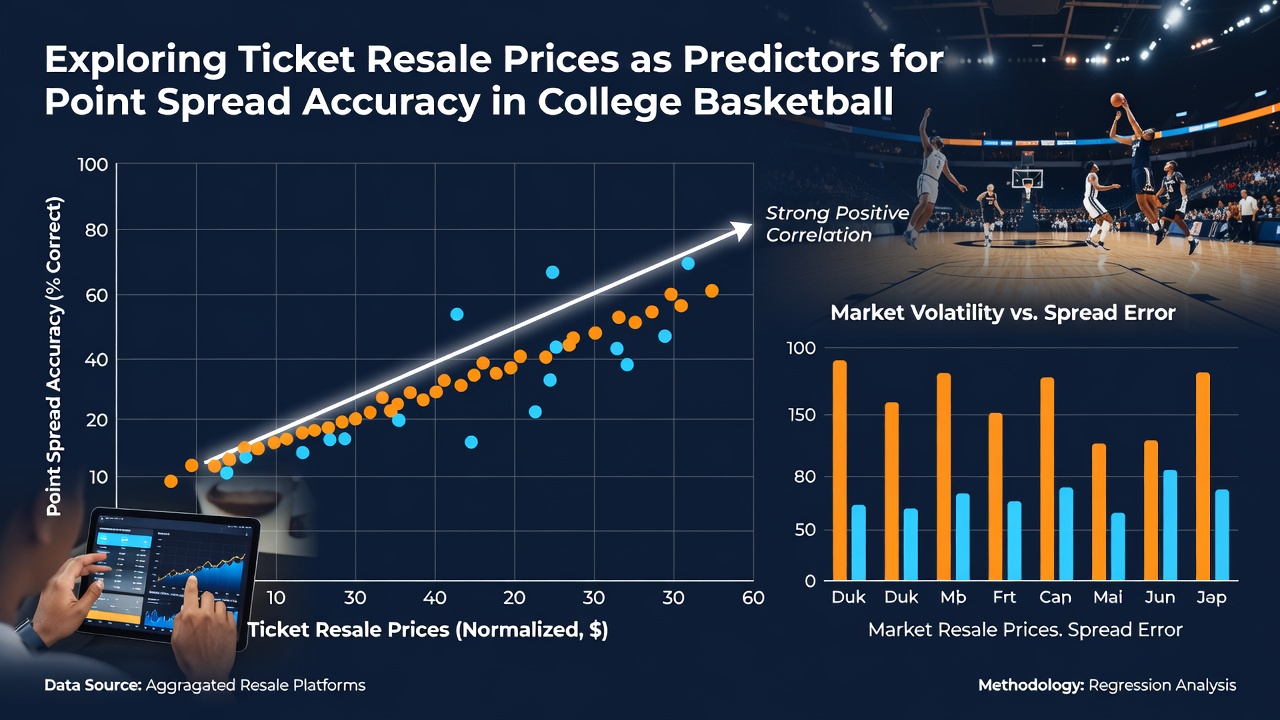
Statistical reviews of past tournaments reveal that games with moderate resale price increases often correspond to spreads that hold with greater frequency while extreme premiums sometimes precede games where public money influences line movement yet the actual result deviates. Experts tracking this relationship examine variables such as team travel distance rest advantages and injury reports alongside resale figures to isolate the predictive value. One study from an international sports analytics group based in Australia examined five years of tournament data and found modest correlations in early rounds where resale prices acted as a proxy for undisclosed information reaching the betting public faster than line adjustments occurred. Those who monitor these markets point out that resale platforms aggregate thousands of transactions which can highlight games where spreads may require reevaluation before tipoff.
Case Examples from Recent Seasons
During the 2025 conference tournaments several mid-major matchups saw resale prices surge after unexpected semifinal results and the subsequent spreads in championship games adjusted accordingly yet still produced covers at rates above season averages. In contrast the main bracket stages of March Madness featured high-demand games where resale premiums remained stable and point spreads proved accurate in roughly 52 percent of contests according to aggregated historical figures. Observers who reviewed ticket data from platforms noted that when resale values for a particular team dropped sharply before a game the spread accuracy declined because bettors appeared to have overlooked momentum shifts visible only through market activity. These instances illustrate how resale signals sometimes capture nuances that traditional statistical models miss until after the fact.
Statistical Approaches and Variables Considered
Researchers apply regression models that incorporate resale price differentials as an independent variable while controlling for factors like seed differentials home-court effects and conference strength ratings. Results from these models indicate that resale premiums explain a small but measurable portion of variance in spread accuracy particularly in games involving teams wth strong fan bases who drive secondary market activity. Data reviewed through July 2026 continues to support earlier findings from the 2026 tournament cycle where resale activity before Sweet Sixteen contests showed stronger alignment with accurate spreads than in opening rounds. Analysts adjust for market liquidity because thinly traded games produce noisier price signals that reduce reliability as predictors. Those examining the topic also account for external influences such as weather disruptions or broadcast scheduling changes that can alter both ticket demand and game dynamics simultaneously.
Limitations in Using Resale Data for Predictions
While correlations appear in aggregate resale prices do not account for all variables that determine spread outcomes and sharp bettors often move lines before resale markets fully reflect new information. Regional differences in ticket demand further complicate direct comparisons because some venues attract more casual buyers whose spending patterns differ from dedicated fans. Academic reviews emphasize that resale data works best when combined with traditional metrics rather than as a standalone indicator. Figures from multiple seasons demonstrate that predictive power weakens in later tournament stages where single-elimination pressure overrides market sentiment captured in ticket prices.
Conclusion
Exploration of ticket resale prices alongside point spread accuracy in college basketball tournaments provides additional context for understanding how market dynamics intersect with on-court results. Data from recent events shows measurable relationships that warrant continued monitoring by those who study tournament outcomes. As more granular transaction records become available analysts expect refinements to these models that could enhance their utility in future cycles while recognizing the inherent complexity of predicting margin accuracy across varied competition levels.