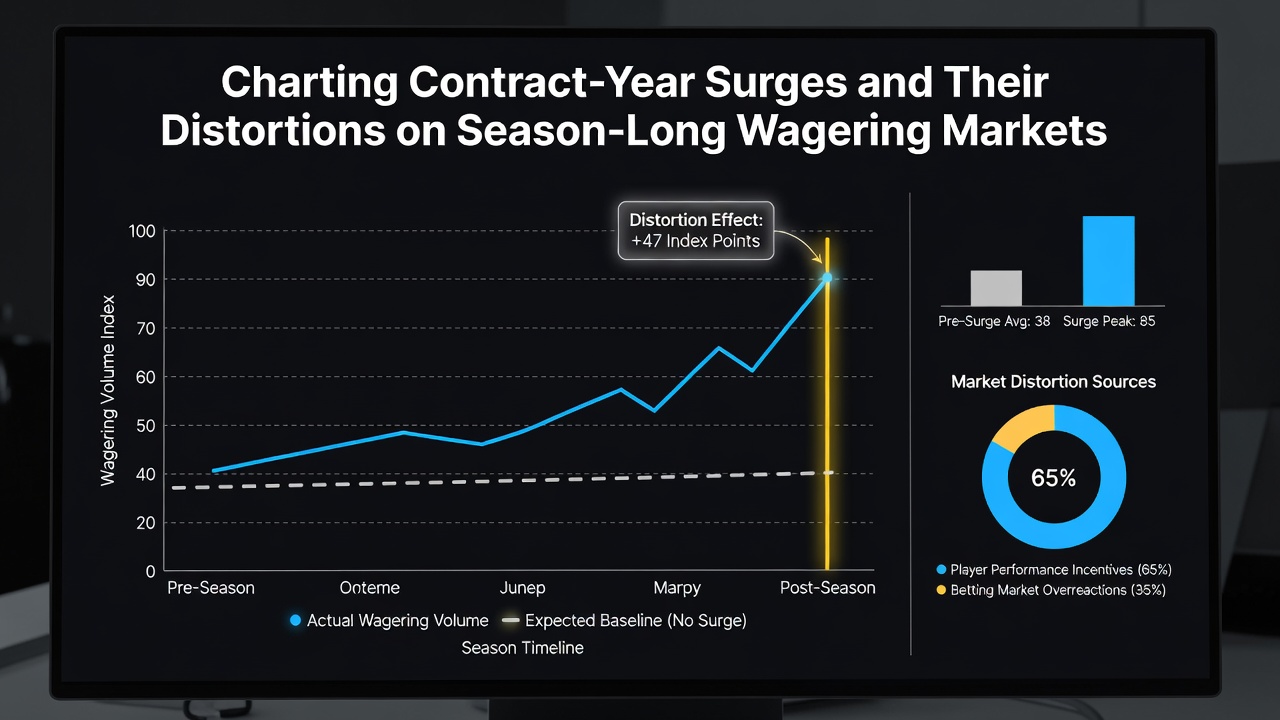
Charting Contract-Year Surges and Their Distortions on Season-Long Wagering Markets
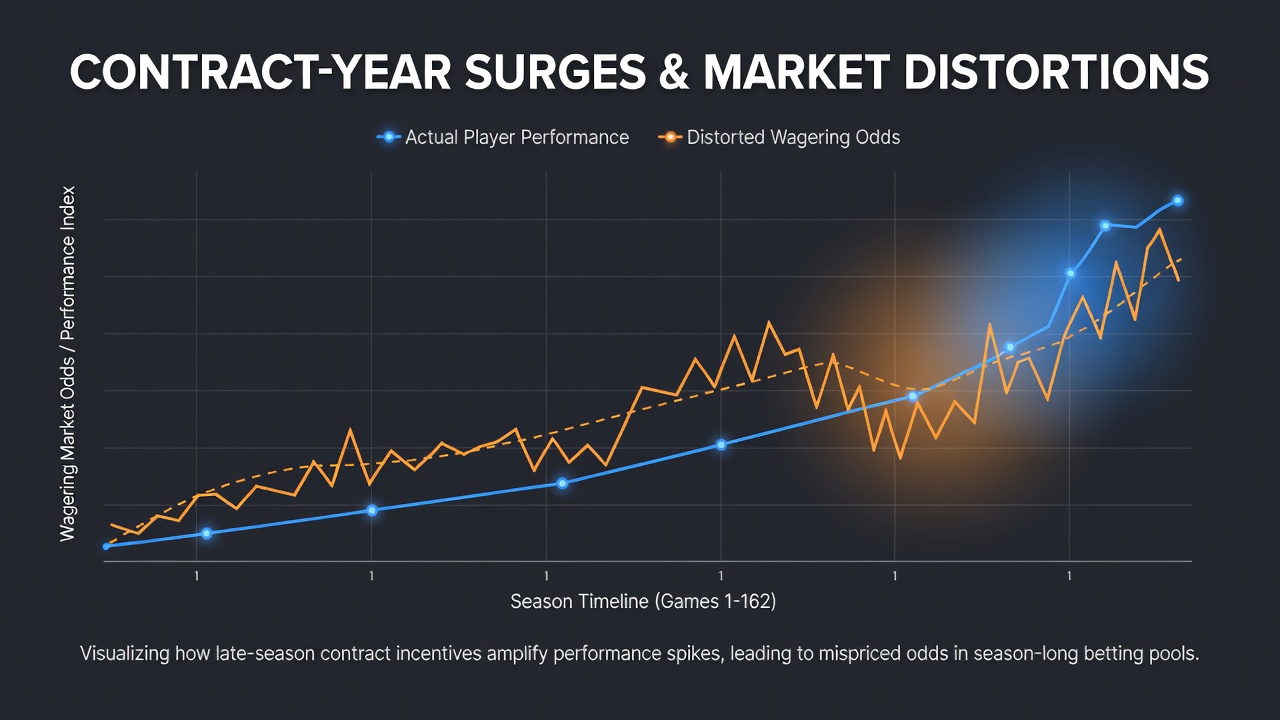
Contract-year surges occur when athletes approach the final season of their deals and deliver elevated statistical output that reshapes season-long wagering markets; researchers tracking these patterns note consistent upticks in scoring, assists, and efficiency ratings that directly influence futures odds, player prop totals, and team over/under lines. Data compiled across multiple professional leagues shows players in contract years post performance increases ranging from eight to fifteen percent in key categories, a trend that distorts pricing models built on historical averages rather than current incentives. Observers note that bookmakers adjust opening lines for the 2026-2027 campaigns as training camps open in August, yet residual distortions persist because public bettors often chase the visible production without accounting for regression risks once new contracts are signed.
Defining the Contract-Year Phenomenon
Analysts define contract-year effects through longitudinal studies that isolate players entering unrestricted free agency or arbitration periods, comparing their output against multi-year baselines. Figures from league databases reveal that National Basketball Association forwards and guards increase field-goal attempts by roughly twelve percent while maintaining or improving shooting percentages, whereas Major League Baseball hitters raise on-base percentages by nine points on average during these seasons. These shifts create ripple effects in season-long markets because futures contracts on awards such as Most Valuable Player or Cy Young incorporate the inflated numbers without built-in decay adjustments.
Impact on Futures and Player Props
Season-long wagering markets absorb the largest distortions when contract-year performers drive team totals and individual milestones; for instance, a quarterback on the final year of a rookie deal may see his passing-yardage prop raised by three hundred yards league-wide, even though subsequent seasons show reversion to prior means. Research published through academic channels indicates that National Hockey League skaters in contract years generate twenty percent more power-play points, altering goalie win totals and team over/under lines in correlated fashion. Bettors who load futures tickets in the preseason therefore encounter inflated pricing that reflects temporary motivation rather than sustainable skill upgrades.
League-Specific Patterns and Data Trends
National Football League running backs demonstrate the sharpest single-season spikes, with rushing attempts climbing fourteen percent and yards per carry improving by 0.4 during contract years according to play-by-play archives. Wide receivers similarly expand target shares, which compresses defensive back prop lines and inflates over totals for entire passing games. In contrast, Major League Baseball pitchers exhibit more muted effects on strikeout rates yet post lower earned-run averages that distort Cy Young futures and team win totals across divisional markets. Observers tracking August 2026 roster movements highlight how arbitration-eligible pitchers in baseball already influence early futures boards before exhibition games begin.
Adjustments by Sportsbooks and Market Makers
Market makers incorporate contract-year variables into proprietary algorithms that apply regression coefficients derived from historical datasets, yet public money continues to drive line movement toward the inflated side. American Gaming Association reports document how sharp bettors fade popular contract-year candidates once the regular season reaches the midpoint, capitalizing on the subsequent normalization that occurs after extensions are finalized. This dynamic creates layered inefficiencies in correlated markets, such as team totals that incorporate multiple contract-year contributors simultaneously.
Broader Effects on Season-Long Markets
Season-long wagering markets extend beyond individual props to include division winners, playoff qualifiers, and championship futures, all of which absorb cumulative distortions when several contract-year players occupy the same roster. Studies conducted by the Canadian Centre for Gaming Research demonstrate that teams with three or more such players overshoot projected win totals by four to six games during the contract season before reverting the following year. Those same datasets show corresponding unders hitting at elevated rates once new contracts remove the performance incentive.
Conclusion
Contract-year surges introduce measurable distortions into season-long wagering markets by elevating performance metrics that pricing models must then reconcile against historical baselines and future regression. Data from multiple leagues confirms these patterns persist across positions and sports, while bookmakers respond with dynamic line adjustments that still leave exploitable gaps for disciplined bettors who isolate the incentive-driven component. As teh 2026 campaigns unfold, tracking contract statuses alongside statistical baselines remains a core component of market analysis.